



This year marks the 10-year anniversary of Mojave Trails National Monument, one of the most remarkable protected landscapes in the Mojave Desert and a treasured part of California’s public lands.
Designated in 2016, Mojave Trails National Monument protects more than 1.6 million acres of stunning desert terrain across southeastern California, stretching from the historic U.S. Route 66 corridor near Amboy to the vast desert landscapes east of Twentynine Palms. The monument preserves an extraordinary mix of natural beauty, cultural heritage, and wide-open space that continues to inspire travelers, artists, and outdoor explorers.
From ancient lava flows and desert mountains to historic travel routes and sweeping night skies, Mojave Trails offers visitors a powerful sense of scale and solitude that defines the Mojave Desert experience.
A Gateway to Mojave Trails
Located along the eastern edge of Mojave Trails National Monument, Twentynine Palms serves as a natural gateway for visitors exploring this vast desert landscape. The community provides a convenient basecamp for travelers looking to experience Mojave Trails’ remote beauty, historic Route 66 landmarks, volcanic cinder cones, and expansive dark skies.
For many visitors, a journey through Mojave Trails pairs naturally with nearby destinations such as Joshua Tree National Park and Mojave National Preserve, creating an unforgettable exploration of California’s Mojave Desert region.
Visitors traveling along historic Route 66 can also explore Amboy Crater, one of the Mojave Desert’s most recognizable volcanic landmarks. This dramatic cinder cone rises from the desert floor and offers adventurous travelers the opportunity to hike across ancient lava fields and experience one of the region’s most unique geological formations.
Another fascinating chapter of Mojave Desert history can be found within the monument at the Desert Training Center, where General George Patton prepared troops for desert warfare during World War II. These historic training grounds played a critical role in preparing soldiers for campaigns in North Africa and remain an important part of the region’s cultural landscape.
Remote wilderness areas such as the Cadiz Dunes Wilderness showcase the Mojave Desert’s vast and ever-changing landscapes, with sweeping dunes and fragile desert ecosystems that highlight the monument’s ecological diversity.
Celebrating Mojave Trails at the Twentynine Palms Visitor Center
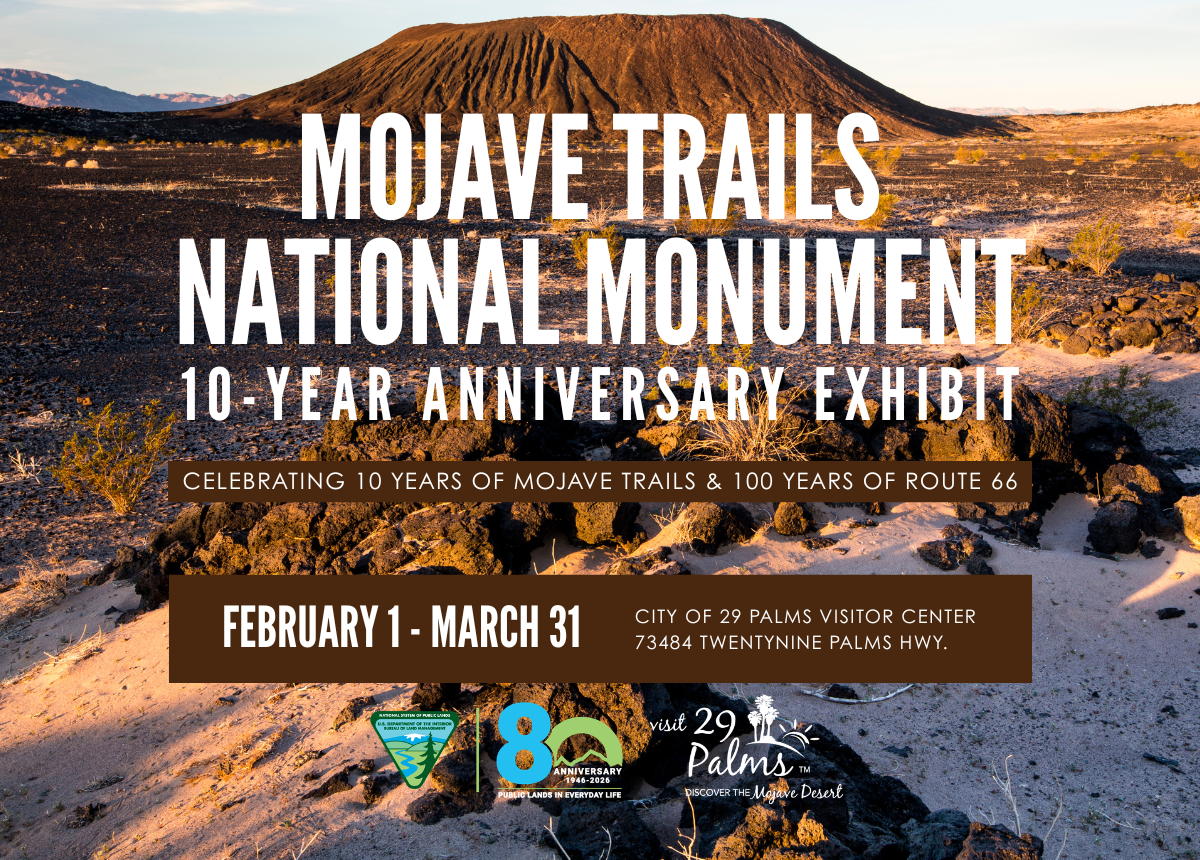
In celebration of the monument’s 10-year anniversary, Visit 29 Palms is hosting a special interactive exhibit at the Twentynine Palms Visitor Center throughout February and March. The exhibit invites visitors to explore the landscapes, history, and cultural significance of Mojave Trails National Monument through photography, interpretive materials, and film screenings.
As part of the exhibit, visitors can view selections from Sands of War, a documentary exploring the Mojave Desert’s role in military training during World War II and the lasting impact on the region’s landscape and communities.
Visitors and residents alike are invited to the exhibit’s special opening reception on February 28 at the Twentynine Palms Visitor Center. This relaxed and informal gathering offers an opportunity to meet staff from the Bureau of Land Management, ask questions, and learn more about Mojave Trails National Monument. Guests can also enjoy cupcakes and iconic Route 66 root beer while picking up commemorative Mojave Trails National Monument posters and Route 66 anniversary pins to take home, while supplies last.
Looking Ahead
Ten years after its designation, Mojave Trails National Monument continues to inspire exploration, education, and appreciation for the Mojave Desert’s unique environment. Visitors traveling through the region are encouraged to take time to discover the monument’s vast landscapes, historic sites, and remarkable desert scenery, and to make Twentynine Palms their basecamp for exploring the Mojave Desert. Explore places to stay in Twentynine Palms.